
TRAINING INSIGHTS
What Is Actually Stopping You From Getting to the Gym?
Have you ever really asked yourself that question honestly? Most of us struggle in some way to bridge the gap between what we say we want to do and what we actually do. That gap is the thing worth examining.
Of course, some of our goals are probably unrealistic. Most of us would like to have the strength and physique of a professional linebacker, speak several languages fluently, and make a generous passive income from our real estate empire while sipping Piña Coladas on a beach in the Bahamas. But even more achievable goals like getting to the gym three times a week, losing fifteen pounds, or feeling stronger at fifty than you did at forty can fall by the wayside when real life gets in the way.
So what is stopping us?
Perhaps one of the most frequently cited reasons is a lack of time. Our time and our health are our most precious resources, and millions of Americans seem willing to trade the latter for the former. Many people genuinely struggle to carve out time for themselves; juggling work, children, and financial demands can leave little room for anything else. Life is genuinely demanding. Most of us aren’t making excuses.
But time is often not the real barrier. If we were honest about our weekly schedules, most of us have a couple hours each week we could dedicate to physical activity. There are always exceptions: the single parent working two jobs to keep the lights on is not who we are talking about here. But many of us spend more time than we would like to admit scrolling social media, watching Netflix, and playing video games.
There is nothing wrong with any of those things, but they often come at the expense of what we tell ourselves matters to us. So what actually gets in the way and what fixes it?
Before we answer that, consider the numbers. The CDC recommends either 150 minutes of moderate aerobic activity per week, such as brisk walking; 75 minutes of vigorous activity, such as jogging; or a combination of the two. They also recommend resistance training targeting all major muscle groups on two or more days per week.
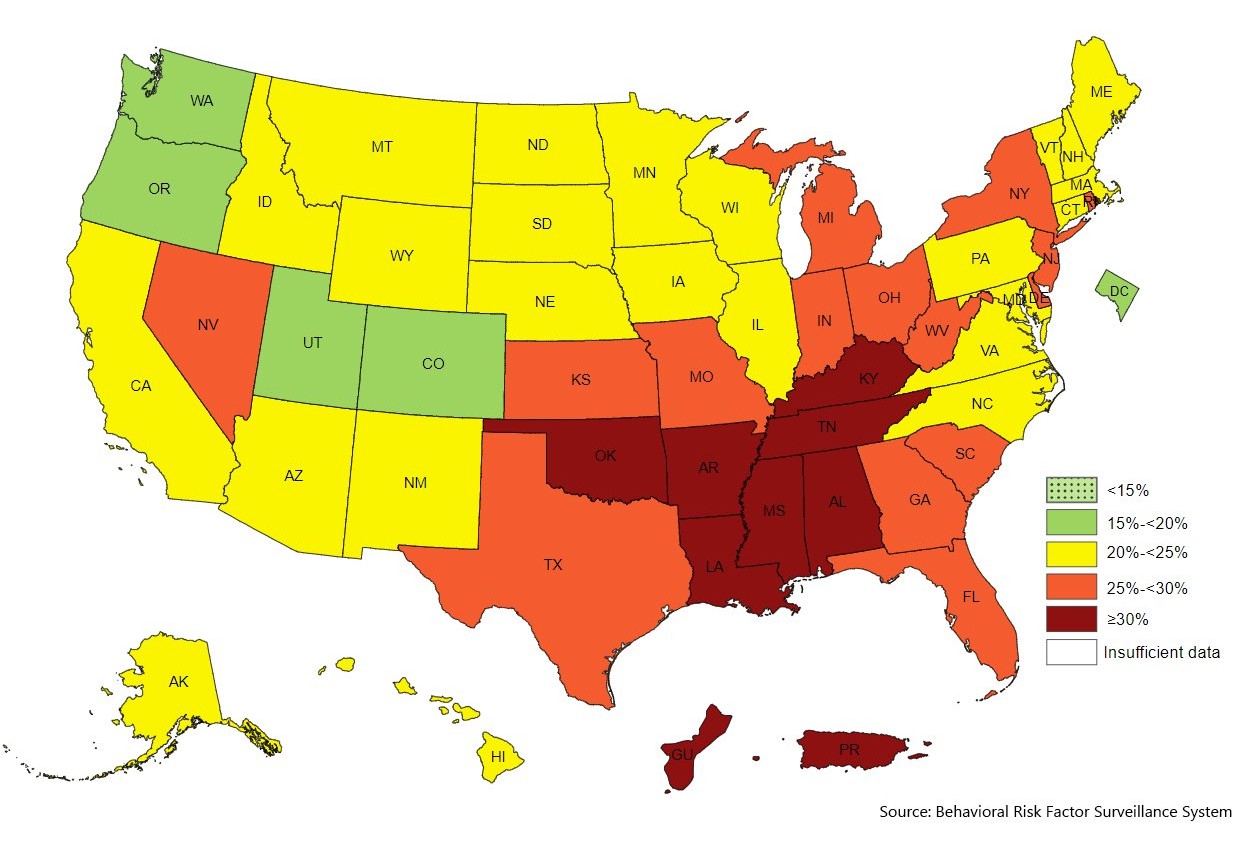
Fewer than 1 in 4 Americans meets both aerobic and resistance training guidelines.
Centers for Disease Control and Prevention (CDC)
Fewer than 50% of adult Americans meet the aerobic criteria. Only 24% meet both. Meeting these guidelines would meaningfully reduce the risk of age-related muscle loss, osteoporosis, cancer, and heart disease while improving quality of life across the board.
So why aren’t we doing it? It isn’t time. The real barrier is psychological and psychology has a name for it.
Self-Determination Theory (SDT) is a framework concerned with the relationship between personality, motivation, and well-being.¹ A core principle of SDT is that humans have an inherent drive toward personal growth. That drive depends on three needs being met: autonomy, competence, and relatedness. When these needs go unfulfilled, motivation tends to fade, and with it the behaviours we were trying to sustain.
Think about what this looks like in practice. An amateur soccer player who loves developing their skill at the game is building competence. When they help a teammate improve, they feel a sense of relatedness. When they work with their coach to design a training schedule that fits around their work week, they have autonomy. They show up not because they have to, but because the activity is meaningful to them. The journey becomes the destination, so to speak.
Contrast that with a child forced by an overbearing parent to compete in a sport they dislike, or even one bribed by the promise of new toys or videogames. They might show up. They might even improve.
But without any sense of joy, ownership, or belonging, they will struggle to stay with it long-term and will rarely get anywhere near their potential.
If going to the gym has always felt like something you should do rather than something you want to do, the problem is often not with discipline. Rather, it comes down to a failure to sustain a sense of intrinsic motivation.
External motivation; pressure from a partner, a gym membership you feel guilty about not using, a vague sense that you ought to take better care of yourself can certainly get you through the door. Professional athletes are remunerated for their efforts, but most are not driven to succeed solely by money. Jalen Brunson took a short-term pay cut to help the Knicks build a championship winning team. Financial reward clearly mattered but it was not enough on its own. Purely external forms of motivation rarely inspire greatness.
The same dynamic plays out in any fitness routine. People who feel they should go to the gym, without feeling any real fulfillment from it, tend to find reasons not to. The motivation fades. The sessions get skipped. The membership lapses.
It is easy to feel intimidated walking into a gym for the first time.
Most gym-goers are just ordinary people trying to get their workout done. But someone who is unsure what exercises to do, or how to do them, can easily feel judged. And there is something quietly paradoxical about a crowded commercial gym at peak hours: everyone has headphones in, everyone is focused on their own reflection, and yet somehow the whole experience can feel profoundly isolating and vulnerable.
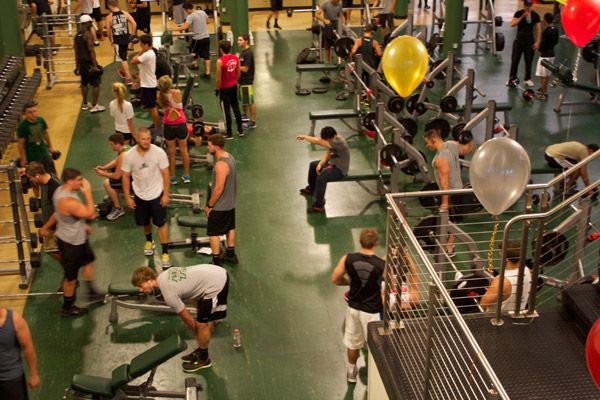
This is where SDT maps directly onto the gym floor. Someone who feels pressured into going; by a partner, by guilt, by negative self-talk, is unlikely to feel any sense of autonomy around a fitness routine. Someone embarrassed about their lack of knowledge will not feel like they are gaining competence. And the forty-something professional hovering awkwardly by the chest press machine, waiting for a group of teenagers to finish filming themselves, is unlikely to feel much sense of relatedness to anyone there.
Most gyms are more welcoming than they appear from the outside. Experienced gym-goers are generally happy to share equipment and answer a genuine question. But the reality is that for many people, the core conditions Self Determination Theory requires are simply not being met and without those conditions, motivation stays fragile.
This is where coaching makes a difference.
Not because a coach does the work for you. Working with a trainer does not mean you stop training on your own; most people who work with a coach at Vantage train independently several times a week. What changes is how you feel when you are there.
You develop a clearer understanding of what your body is doing and why. You learn to feel which muscles are working, to distinguish effort from pain, and to understand the purpose behind each exercise. That knowledge builds competence not just in the gym, but in how you relate to your own body over time.
You are also given the autonomy to train in a way that is actually yours. Programs are built around what you enjoy, what your schedule allows, and what your goals actually are not a generic template. When you work out alone, you are following something you had a hand in designing.
And then there is the environment itself. A small, private training space is a fundamentally different experience from a commercial gym. You are not anonymous. People know your name. You are training alongside others who are showing up for similar reasons, without performance or pretence. That sense of genuine belonging of feeling like you are part of something rather than alone in a room full of strangers is harder to quantify than reps and sets, but it may be the most important factor of all.
Whether you train with a coach, find a class you love, or build something on your own — the question worth sitting with is not how much time you have. It is what would make you actually want to show up.
Start small. Focus on what you can control. Celebrate the session you did rather than the one you skipped. Motivation is not a fixed trait, it is something that develops when the conditions are right.
You are not alone in this. And you might be surprised at who is already in your corner.
References
Mossman, L. H., Slemp, G. R., Lewis, K. J., Colla, R. H., & O’Halloran, P. (2024). Autonomy support in sport and exercise settings: a systematic review and meta-analysis. International Review of Sport and Exercise Psychology, 17(1), 540–563.
Zhang Y, Ren M and Zou S (2022). Effect of Physical Exercise on College Students’ Life Satisfaction: Mediating Role of Competence and Relatedness Needs. Frontiers in Psychology, 13:930253.